| CircumSpice | Winter 1998 | p.3 |
An Afternoon with Judith Rossner, Alumna and Novelist
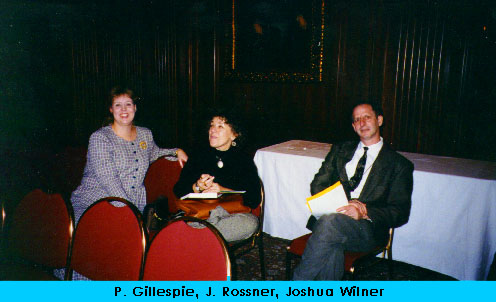
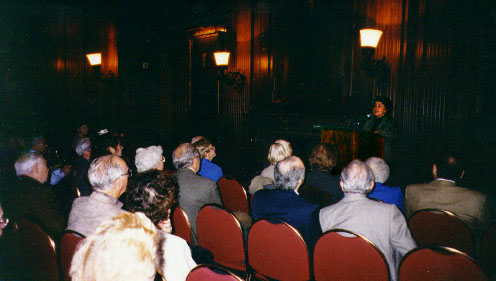
On November 3 in a cozy, antiquely appointed meeting room on the University Club's seventh floor, the Friends of the City College Library heard Judith Rossner read excerpts from her recent novel Perfidia and talk about her life as a published novelist. The event was co-sponsored by the Rifkind Center for the Humanities.
Well known for her best-seller/movie Looking for Mr. Goodbar, CCNY alumna Rossner started by reviewing her life-long relationship to City University and City College. Her mother, a Hunter grad, encouraged her writing from kindergarten when she produced her first poem. Her father was a CCNY alumnus, class of 1928. When Ms. Rossner arrived at City, she benefitted from two writing teachers, Teddy Goodman and Irwin Stark, who both made a point of the importance of steady practice.
The excerpts from Perfidia threw us into the gripping story of a pre-schooler, who at age five is displaced from what little she had of her wandering mother's affections by a baby brother. She gets relegated to an addicted and distant step-father on her way down a path of resentment and rage. We did not hear the end of the tale, but heard enough to find out that images of prison life in New Mexico were coming up.
In the question-and-answer time that followed, Rossner attributed her success in having ten of her novels published to her persistence in "just doing it." She makes a point of keeping to a writerly routine, noting story ideas in the news, and commuting regularly to a writer's space, which she rents in collaboration with others. Home is New York City after some years on the West Coast, although she makes special trips away from the city to research some of her settings, as in New Mexico. She expressed sympathy for the economic plight of so many creative writers, and bemoaned the "wild card" influence of Hollywood. She appreciated the reward of a feature-length film based on one of her works, but she knows others who seem side-tracked writing for a fee screenplays that are never produced.
Regarding writing tricks and techniques, she's wary of the "helpfulness" of the computer for the novelist's craft: it's too easy for too many words to come pouring out with too little editing. As to the unfolding of her stories, she said that there comes a point in the development of the story line when unexpected turns and twists take over the plot. For instance in her 1983 work August, the woman undergoing psychoanalysis "took over" the novel midstream, pre-empting both the original story and the analyst. She said the novelist must learn to let the unconscious tell its story.
And thus were we treated to a peek behind the scenes of fiction in formation.
Charles
Stewart
chscc@cunyvm.cuny.edu
|
Go to next page
|

